
Raw materials
Limestone and corrective materials are prepared to meet the chemistry required by the production process.
Global Industry Ecosystem · 03
Explore cement and clinker production, grinding, distribution, quality requirements and bulk or bagged delivery pathways.
Sector overview
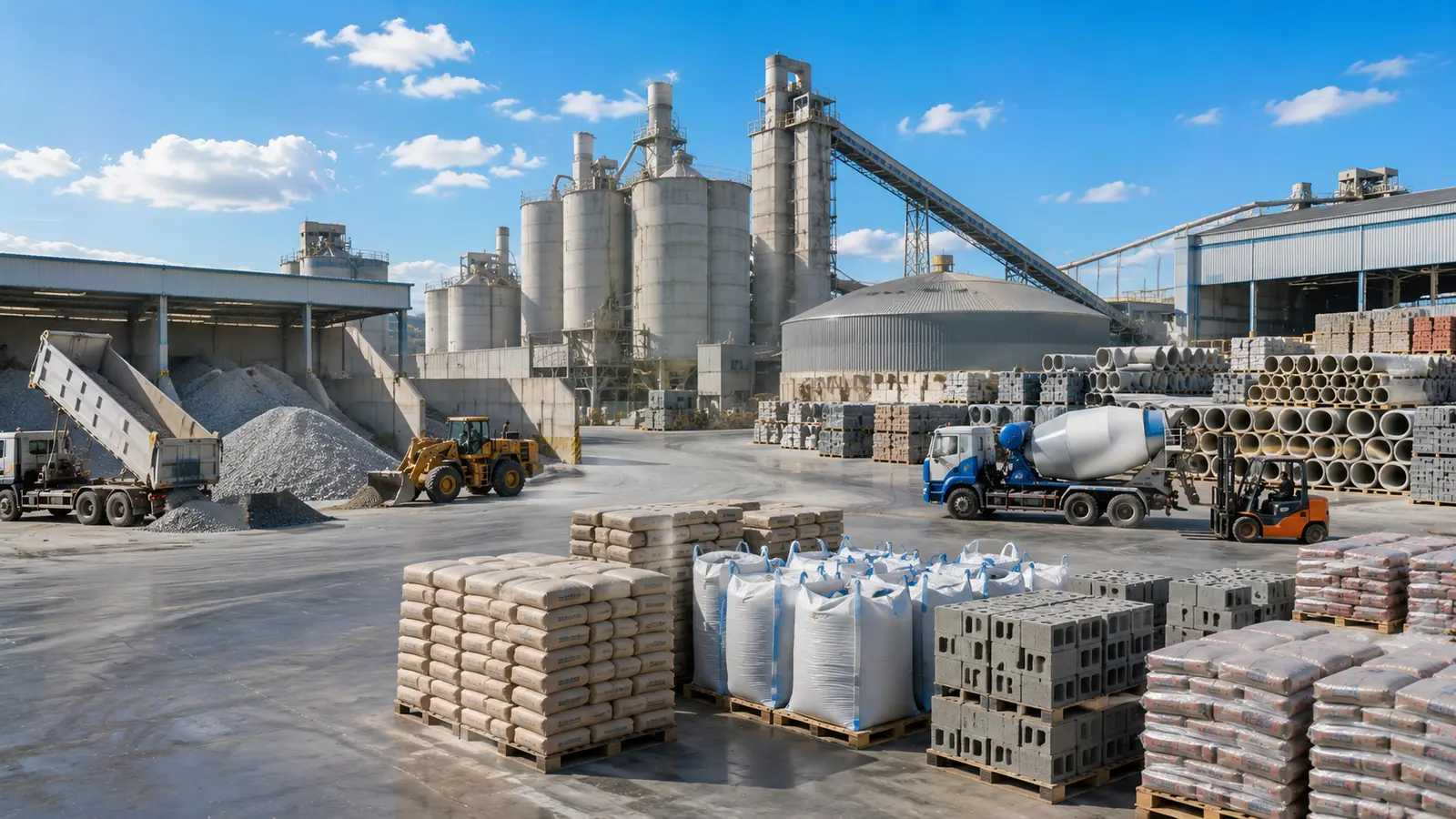
The cement and clinker ecosystem links quarries, integrated plants, grinding terminals, laboratories, ports, distributors, ready-mix producers and construction projects. Chemistry, strength class, setting behaviour, fineness, packing and delivery conditions determine suitability.
Value chain
Limestone and corrective materials are prepared to meet the chemistry required by the production process.
Kiln operations convert the prepared raw mix into clinker with controlled mineral characteristics.
Clinker, gypsum and permitted constituents are ground to produce the required cement type.
Bulk and bagged products move through terminals and distributors to concrete, precast and project users.
Demand drivers
Technical priorities
Logistics pathways
ALSHEHBA activity pages
Common questions
Include cement type, strength class, applicable standard, quantity, packing, destination and delivery schedule.
Chemical and physical quality parameters, intended cement type, volume, shipment basis and discharge requirements are important.
The delivery format depends on product availability, destination facilities, quantity and the agreed commercial programme.
Cementitious materials must be protected from moisture to preserve handling and performance characteristics.